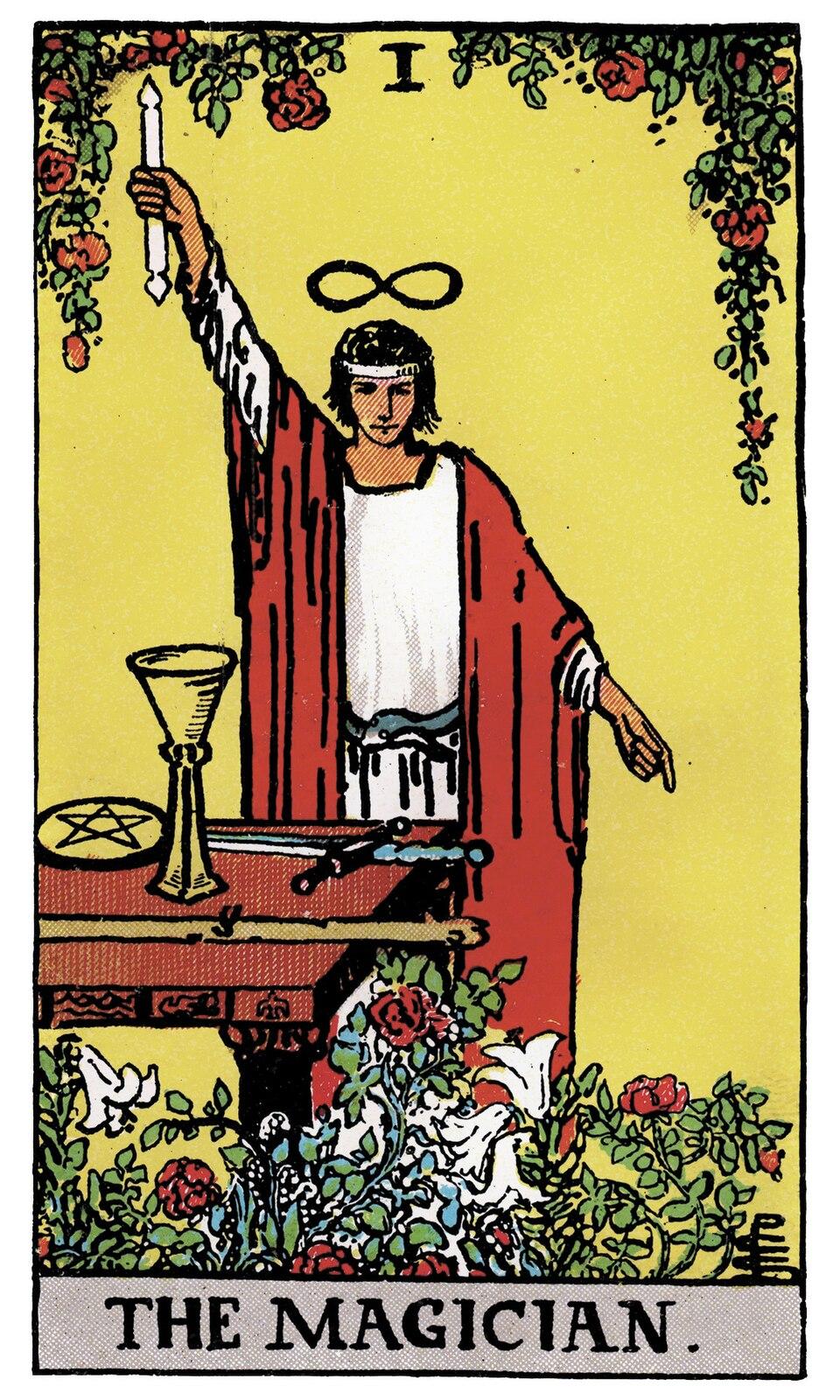
 The Magician
A cup, a pentacle, a sword, and a wand lie on the Magician’s table. The tools are ready. The card asks what you can make with them.
Upright meaning
Upright, the Magician favors a deliberate act. A skill that feels ordinary to you may be exactly what a task needs. The four tools on the table suggest different ways into the same problem. A difficult idea might be easier to draw than to explain aloud. Part of the Magician’s skill is recognizing when to put down the tool you know best and reach for one that suits the task.
Reversed meaning
Reversed, talent can go unused or become a persuasive display with little behind it. Look for the distance between a promise and what someone can actually deliver. This can be an uncomfortable card for someone with a real gift. You might be so practiced at describing the project that talking about it feels like doing it. What would exist at the end of an afternoon spent making it that does not exist now?
Love and relationships
Words matter here because they can become gestures. If you have said you want more time together, propose a day and make room for it. Notice whether the gesture answers what the other person asked for. A thoughtful surprise can be lovely, yet someone who asked for help on a busy morning may treasure a packed lunch more. Skill in love includes knowing where your effort will actually be felt.
Career
Bring a sample to the conversation. A rough sketch or a small working example can show what a polished pitch leaves vague. If you are asking for a change in how a team works, show what one changed handoff would look like. A colleague can then tell you exactly where your idea helps and where it overlooks the person doing the next part.
Money
Take stock of what you already have for a project. A tool you can borrow or a skill you can exchange might change what the project requires. Suppose you want to start sewing. Before pricing a new machine, try finishing a small project on a borrowed one. You may discover that space, time, or patient instruction is the resource you actually need.
Challenges
Confidence can move faster than practice. Where would it help to demonstrate one part of your idea before asking someone to believe in the whole thing? Persuasion carries a responsibility here. If someone trusts your confidence, can you tell them which parts you have tried and which are still a guess? That honesty gives them a genuine choice about joining you.
How to apply this card
Lay out the materials for one task. Give yourself a short stretch of uninterrupted time and make something you can show. At the end, invite one specific response. “Can you follow these instructions?” will tell you more about your draft than “Do you like my idea?” Use the answer to decide what needs another attempt.
The lesson
The Magician teaches you to judge an intention by the care you can give it in practice. Your first attempt can be rough and still be useful. Once it exists, someone can use it, answer it, or help you see a possibility that was invisible while the idea was yours alone.
A message from this card
Let one small piece of work speak for you.