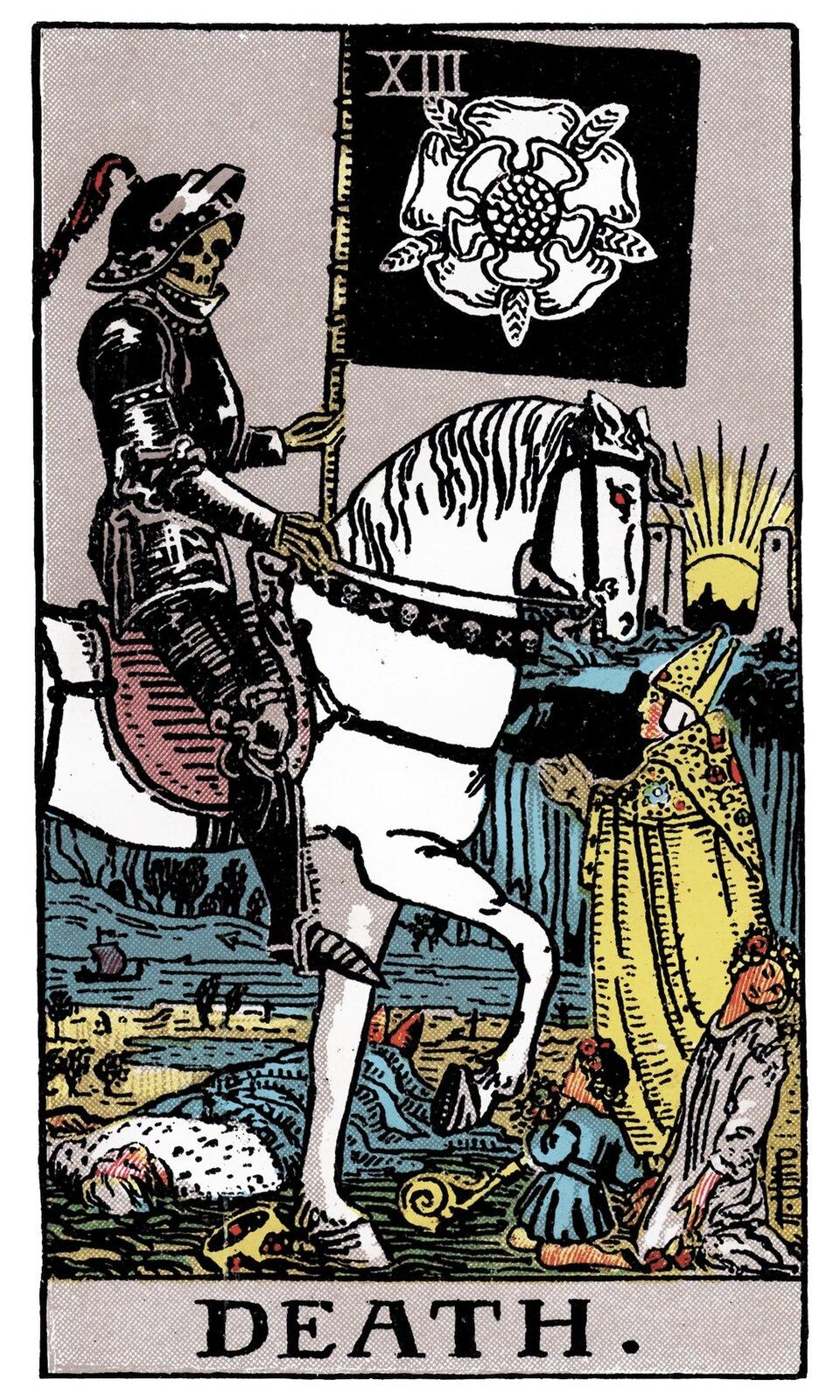
 Death
A skeletal rider carries a banner with a white rose. In a reading, Death symbolizes an ending that makes room for change, such as leaving a familiar home or outgrowing a role.
Upright meaning
Upright, an ending deserves acknowledgment. Putting down a former role or habit can make room for a different way of living. A chapter can finish before the feelings about it are settled. Think of leaving a home you loved because your life has changed. You can hand over the keys while still missing the light in the kitchen. The card gives both the ending and the attachment their due.
Reversed meaning
Reversed, a familiar arrangement may be hard to release even after its purpose has passed. It can take time to understand what you are reluctant to lose. Sometimes what you want to keep is smaller than the old arrangement. You might miss the companionship of a former workplace more than the work itself. Naming the specific loss can show you what deserves honoring and what you are ready to put down.
Love and relationships
A relationship can outgrow an old pattern of relating. Ask which habit belongs to an earlier version of your lives and what you want to do differently now. Perhaps one person still makes every decision because that made sense when the other was new to the city. Years later, the habit may have outlived its usefulness. Acknowledging its end gives both people a chance to relate as they are now.
Career
Finishing a role can involve giving up an identity as well as a set of tasks. Which skills and relationships do you want to carry into the next chapter? When a long project closes, it is easy to keep attending its meetings because they once gave the week its shape. Arrange a final handoff. Then decide which relationships you want to maintain for their own sake.
Money
Review an expense tied to a chapter that has ended. Does it still support something you value today? An old studio rental or club membership can represent a version of yourself that once mattered deeply. Look at what the arrangement gives you now and what you would miss about it. Honoring an interest might take a different form in the next chapter.
Challenges
An ending can bring relief and sadness together. Giving one of those feelings a name does not erase the other. You may feel differently on the day you finish than you do a week later. That change of feeling is worth noticing. It may tell you what you miss without requiring you to reopen the whole chapter.
How to apply this card
Choose one small way to mark a transition. Archive a completed project, return something you borrowed, or thank someone who shared that chapter. Write down one detail from that time you want to remember. Then identify one obligation that ended with it. Treating memory and obligation separately can make an ending easier to understand.
The lesson
Death speaks to the work of recognizing a transition already present in your life. Some things end while the affection, skills, or memories they gave you remain. You can choose what to carry forward once you know which part has actually come to a close.
A message from this card
You can honor what is over and still let it end.