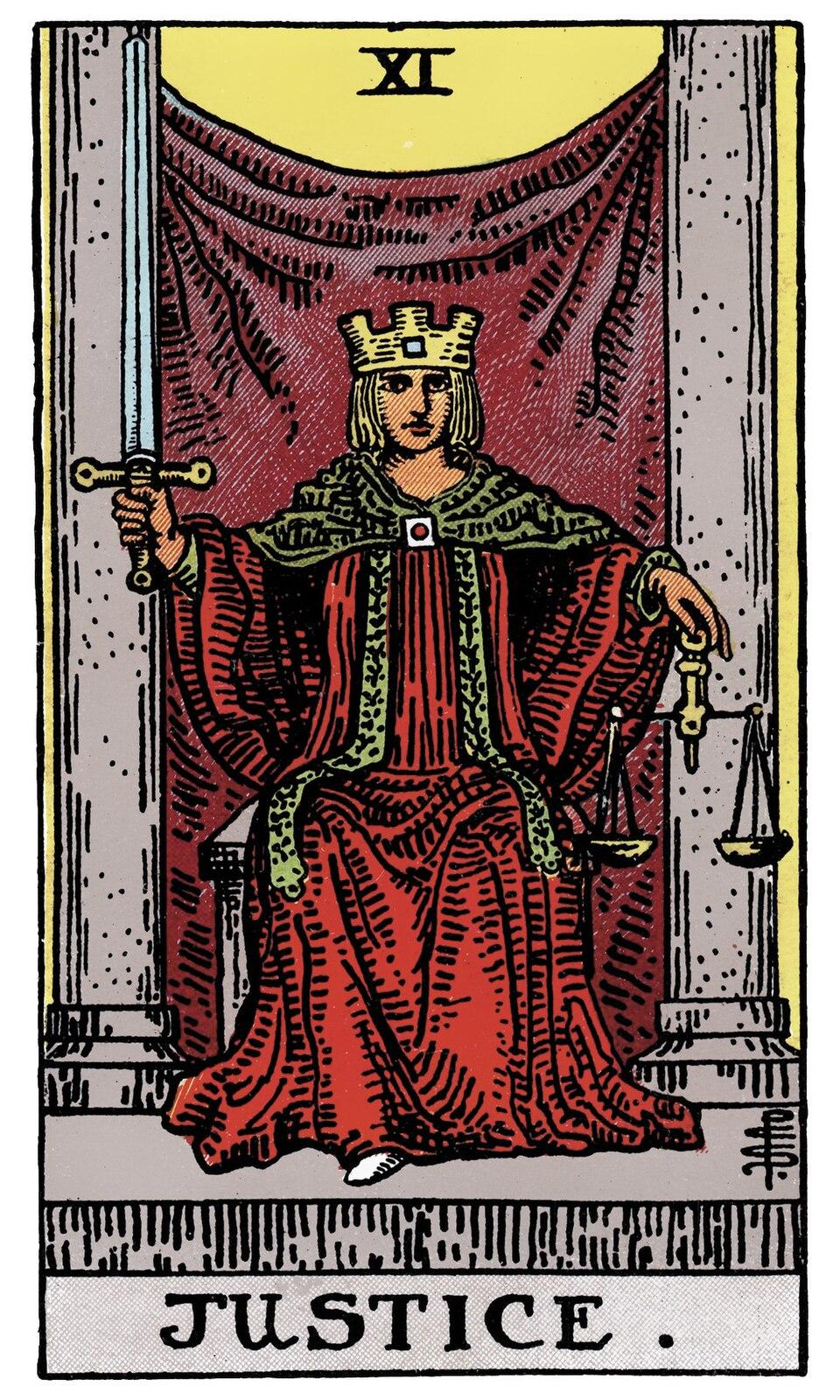
 Justice
 holds scales in one hand and a sword in the other. Weighing the evidence and making a decision are separate acts. The card asks for care with both.
Upright meaning
Upright, Justice considers what happened, who was affected, and what a fair response would be. Accountability begins with an accurate account. The scales allow time for weighing. The sword suggests the moment when a decision has to follow. In an everyday dispute, you might begin by hearing two accounts and end by changing who does the work. Listening matters partly because it can change what you decide.
Reversed meaning
Reversed, a judgment may rest on incomplete facts or an uneven standard. Look for whose side of the story has been left out. Sometimes you discover that you excuse a missed deadline in yourself and read it as carelessness in someone else. Looking at both situations by the same standard can reveal where you have been generous, where you have been harsh, and what a fair expectation would be.
Love and relationships
In a recurring argument, describe one event you both remember. Hearing its impact can reveal something that defending your intention misses. If an apology has failed to settle an argument, ask what repair would look like to the person affected. “I will let you know before changing our plans” addresses something concrete. They can tell you whether that was the part that hurt.
Career
If responsibilities are uneven, bring examples to the discussion. A clear account of who does the work makes it easier to agree on a fair change. A teammate who appears to finish less may be answering everyone else’s questions all afternoon. Include that work in the account before redistributing assignments. The fairest decision can change when previously invisible labor becomes visible.
Money
In a shared arrangement, check what each person understood they would contribute. Fairness may depend on circumstances as much as on equal amounts. Two housemates might agree to split supplies equally while one buys them, carries them home, and keeps track of what runs out. Bring the work as well as the receipts into the discussion. There may be a fairer arrangement than either person first imagined.
Challenges
The wish to be proved right can crowd out the work of putting something right. What part of the outcome is yours to address? Being able to explain why you did something does not settle how it affected somebody else. Try listening for the part of their account that would still matter even if they understood your intention perfectly.
How to apply this card
Write a short account of a disagreement from each side. Circle one fact you need to confirm before deciding what to do. Under each account, add one repair a person could actually carry out. Then ask whether the proposed repair addresses the effect described or merely brings the argument to an end.
The lesson
Justice links clear judgment with what happens afterward. A fair account gives each person room to be heard, including the person who made a mistake. Its value shows up in the next arrangement, when people can point to something that changed because their experience counted.
A message from this card
A fair answer begins with a careful hearing.